The Journey: a map of Islamic history that lights up as time moves
I built an interactive map and timeline of the prophets, the Companions and the scholars after them. Here's a look inside.
Yesterday I built The Journey (الرحلة): an interactive map and timeline of Islamic history, from Prophet Adam (AS) to Prophet Muhammad ﷺ, the Companions, and the scholars who carried the knowledge after them.
I built it because I wanted to know which prophets and scholars lived at the same time, where they lived, and the journeys they took.
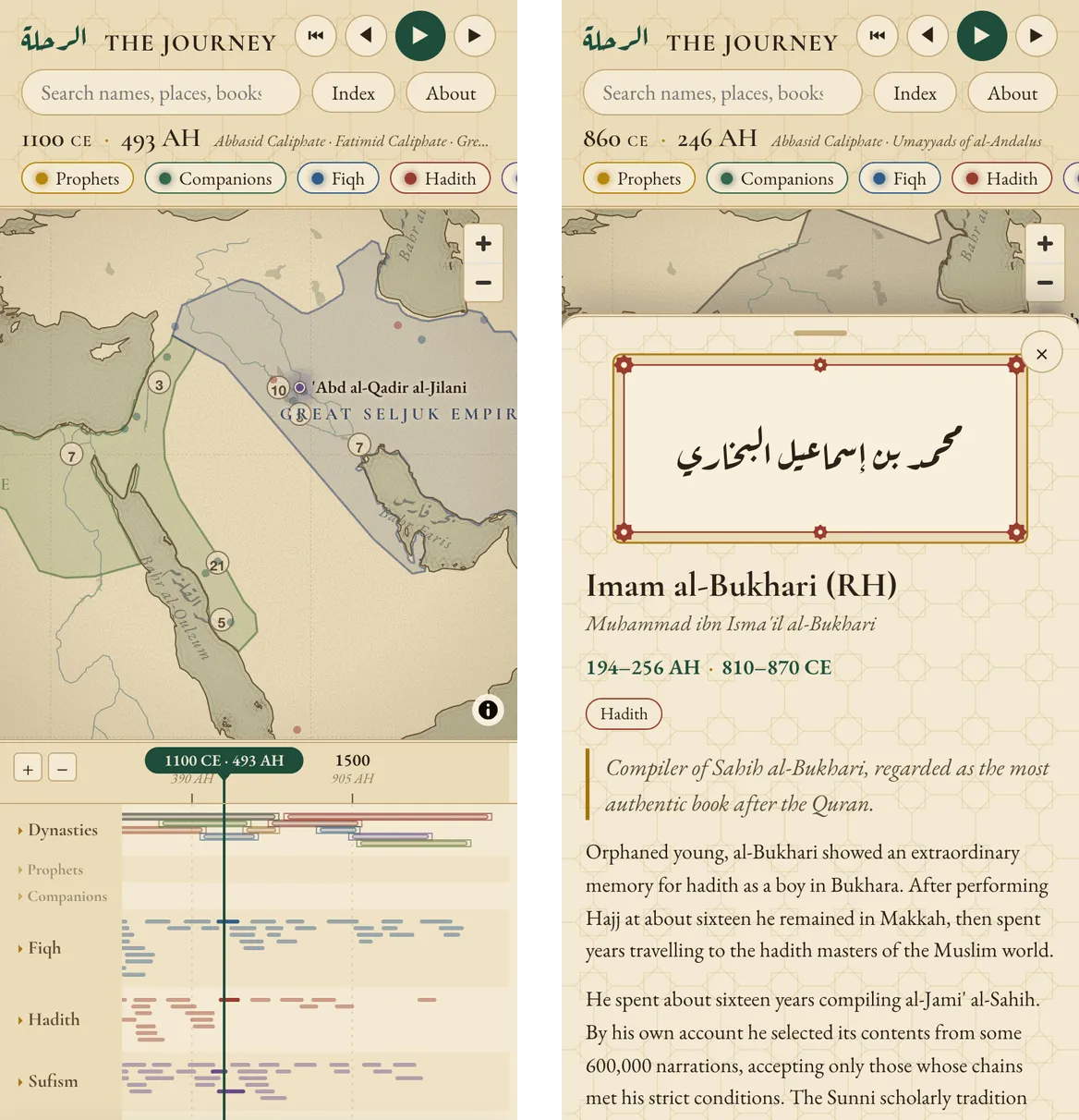
The idea is simple. A map sits on top and a timeline sits below, and the two move together. As the year changes, each person lights up on the map where they were born, follows them as they move, and fades when they pass away.
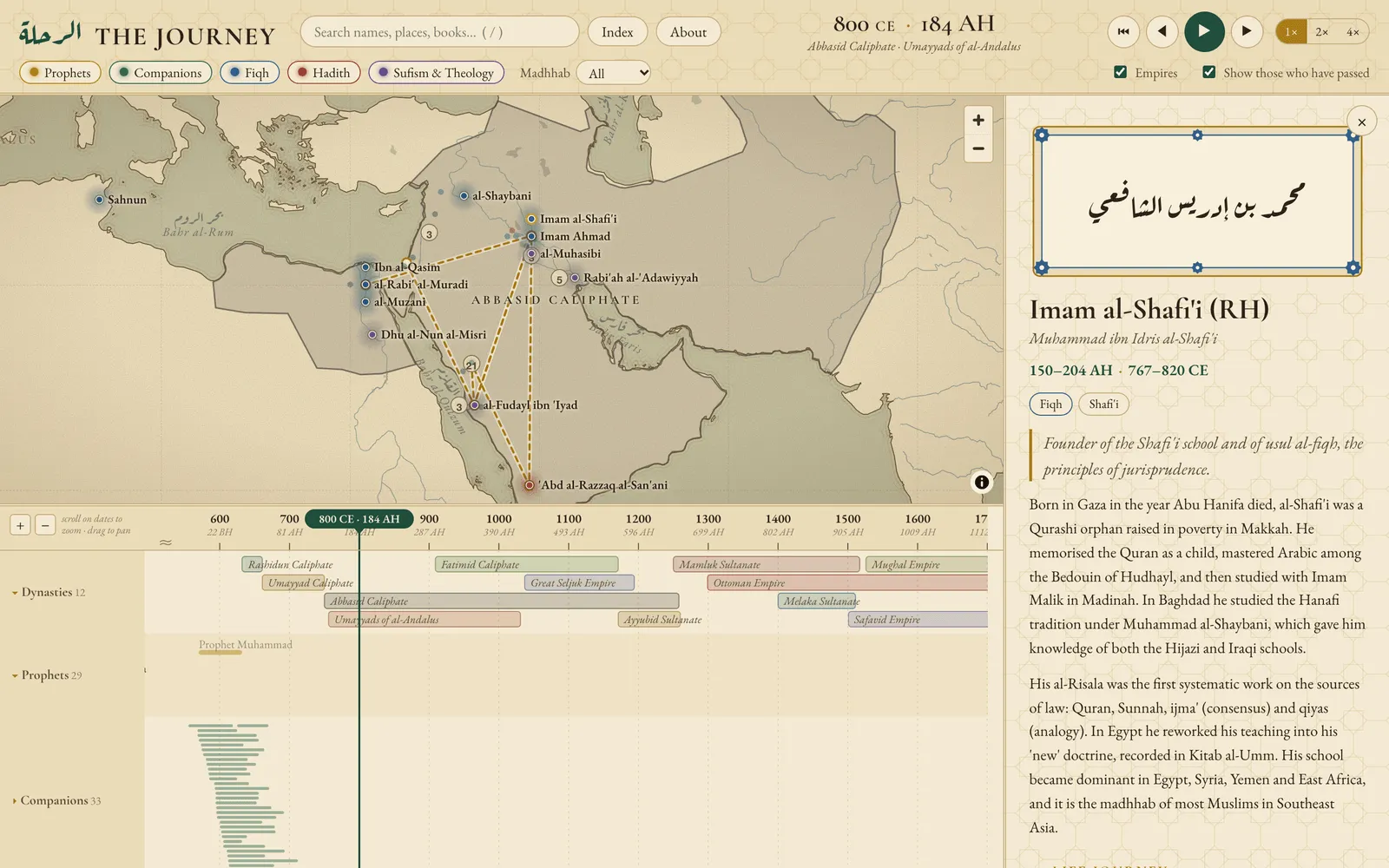
Following one life
Click any light, or any name on the timeline, and their story opens on the right. The map draws their life journey as a dotted line. Imam al-Shafi’i’s runs from Gaza to Makkah, Madinah, Baghdad and finally Fustat in Egypt.
There are no pictures of people anywhere on the site. Each story opens with the person’s name written in Arabic calligraphy instead.
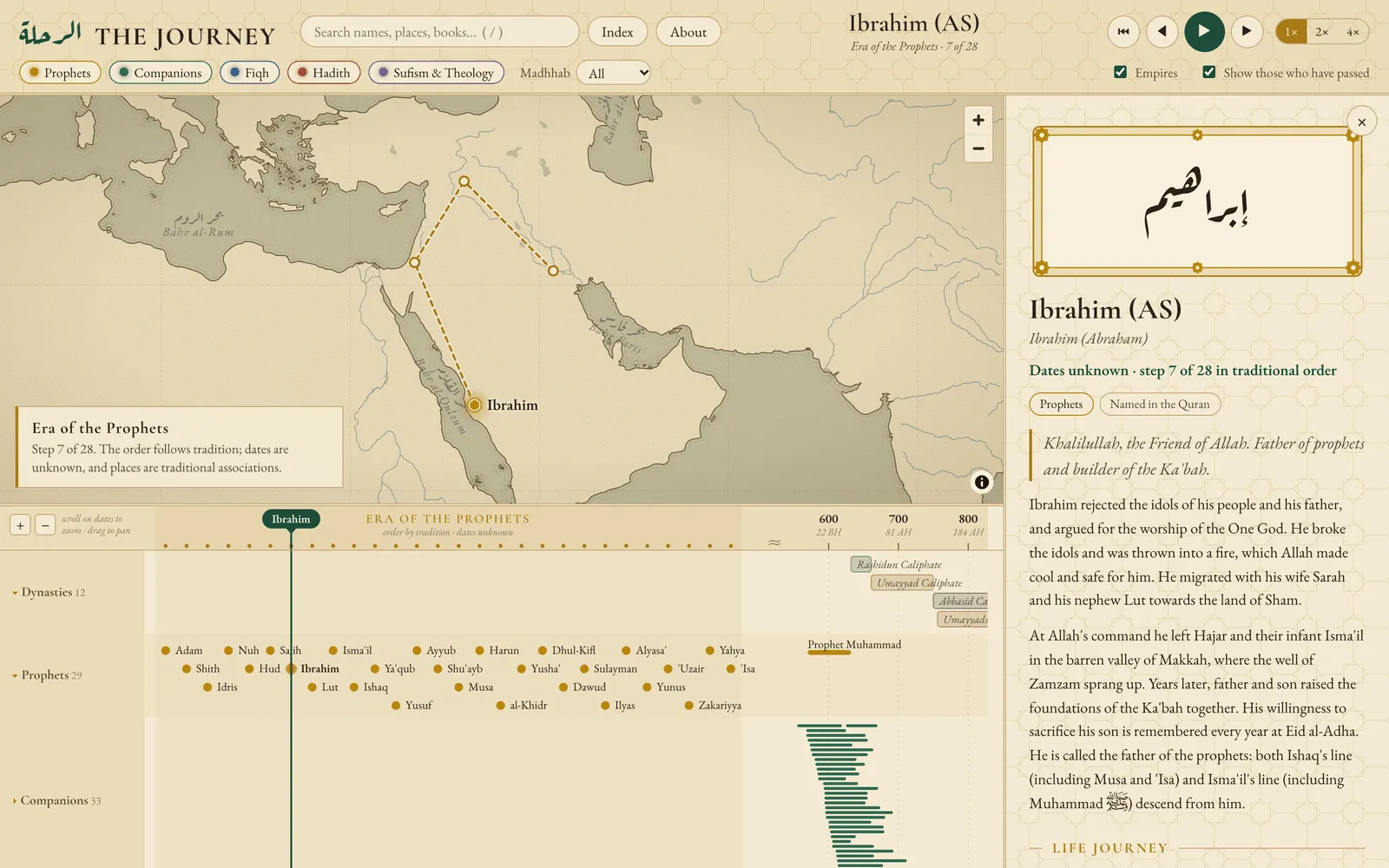
The prophets come first, without dates
Nobody knows the dates of the prophets before Muhammad ﷺ, and I didn’t want the map to pretend otherwise. So the timeline has two parts. The first part steps through the prophets one by one in their traditional order, and each one lights up in the place traditionally linked to them. The dated years only start around 570 CE.
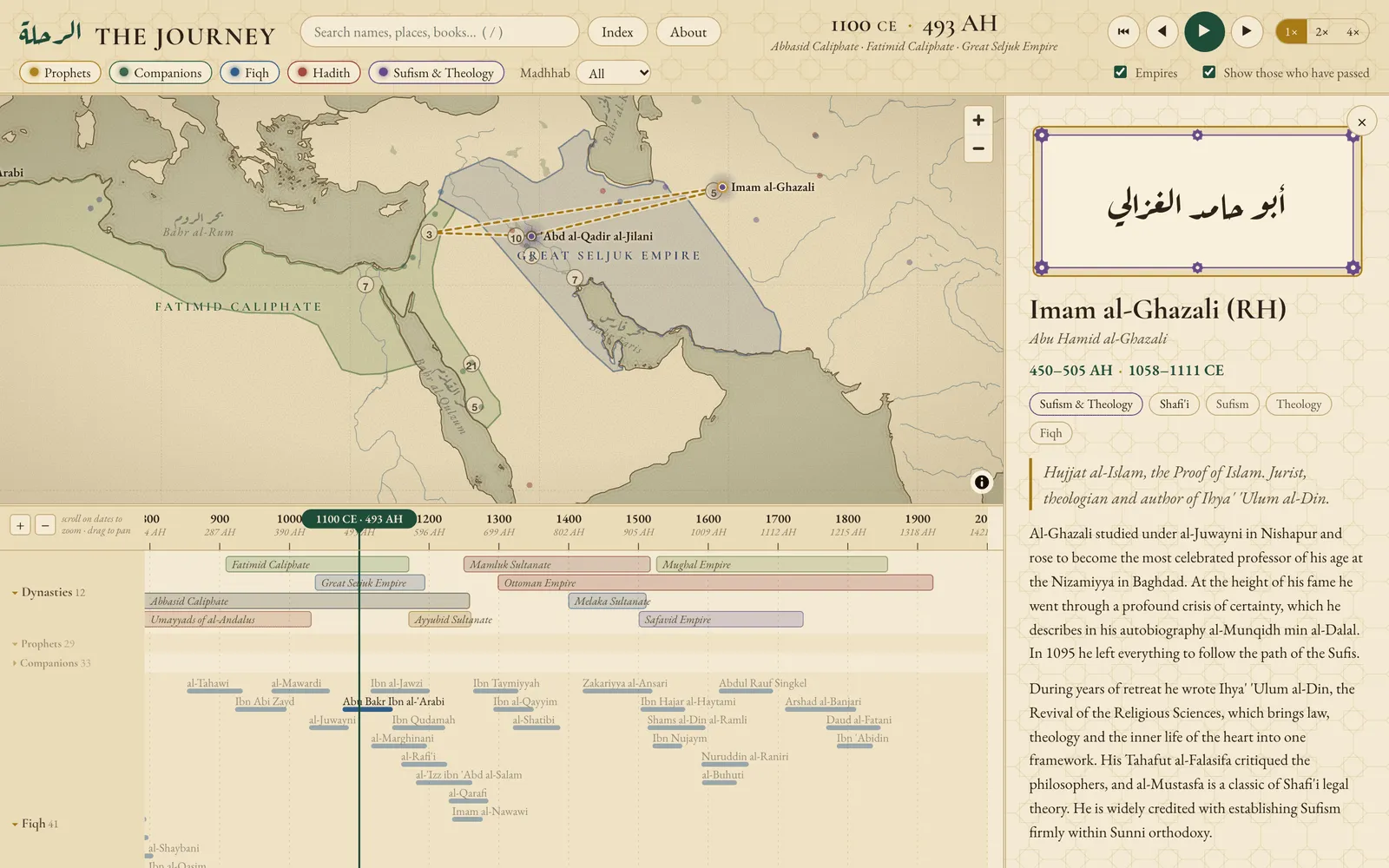
Empires in the background
Tick Empires and the map shades the main dynasties of the time. In 1100 CE you can see the Fatimids in Egypt and the Great Seljuks in the east, with Imam al-Ghazali’s travels drawn across them. The borders are approximate, and the site says so.
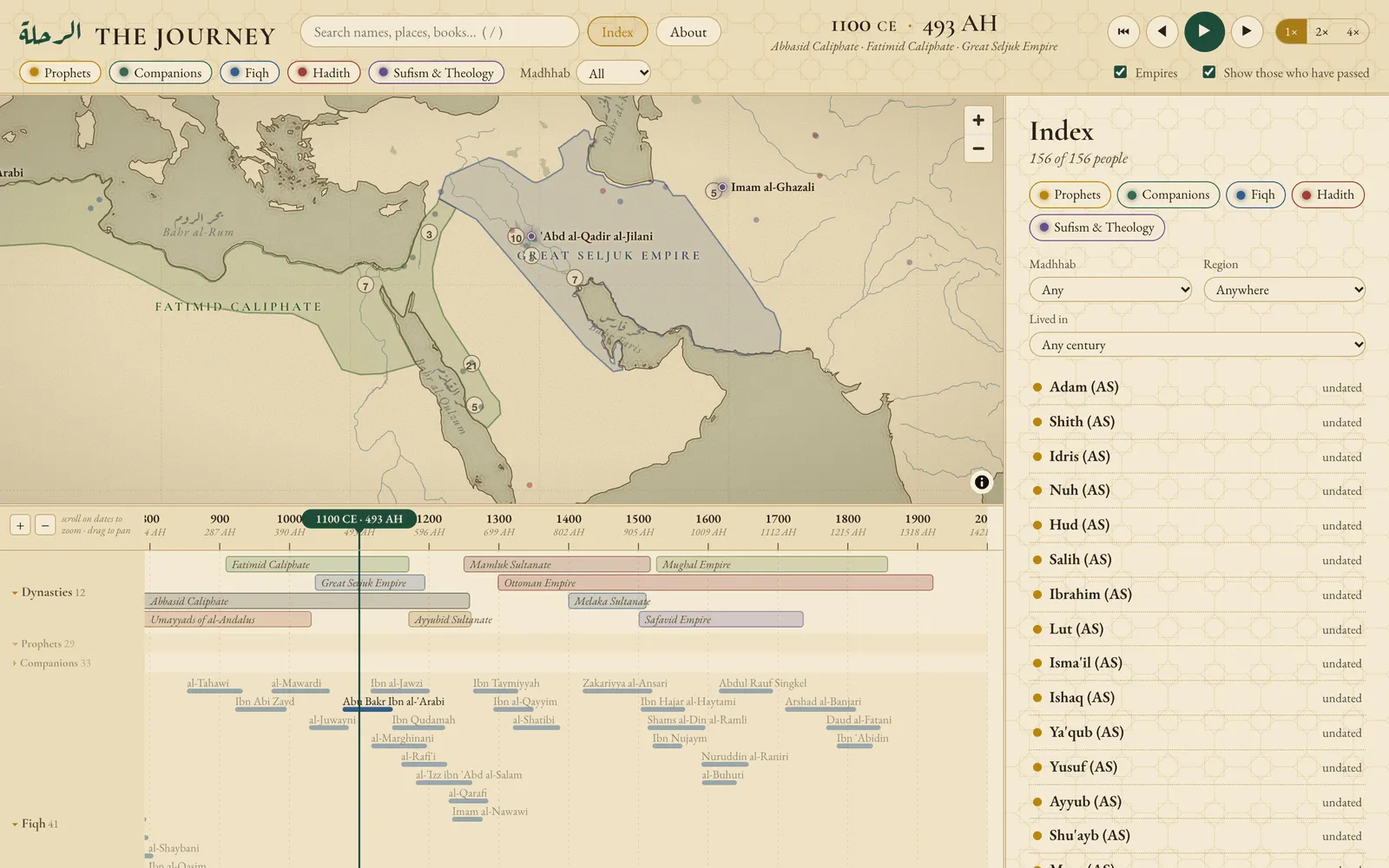
Finding someone
Press / to search. Spelling is forgiving: Syafie, Ibnu Arabi, Aisyah and Arabic script all find the right person. The Index lists all 156 people and filters by group, madhhab, region and century.
It works on phones too. The timeline stacks under the map, and stories open as a sheet from the bottom.
Under the hood
It’s a small static site. The base map comes from Natural Earth, and the historical borders from historical-basemaps by André Ourednik.
Try it
It’s live and free at therehlah.com. If you want a website developed, you can reach me at dualworks.asia.